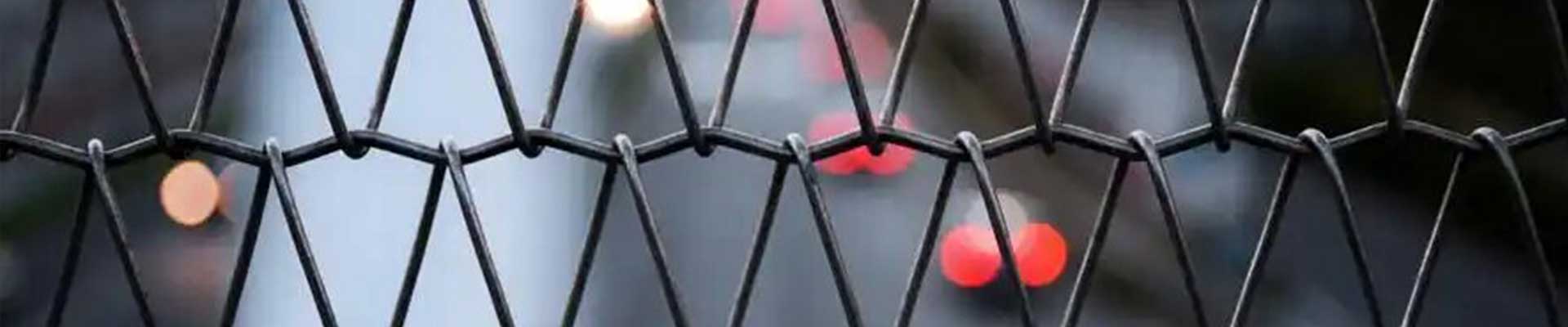
Tennis court windbreak nets with advertising print
I. Product Overview
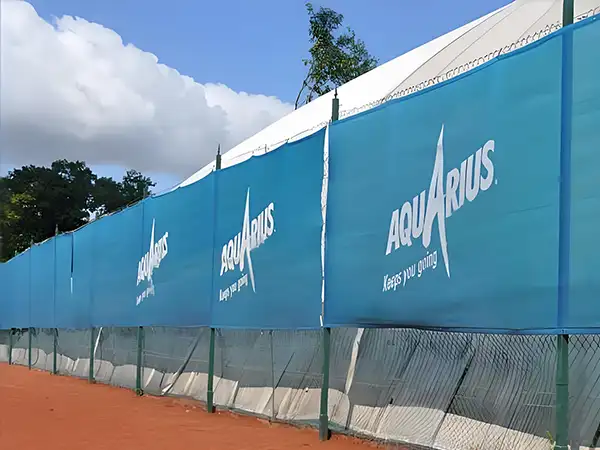
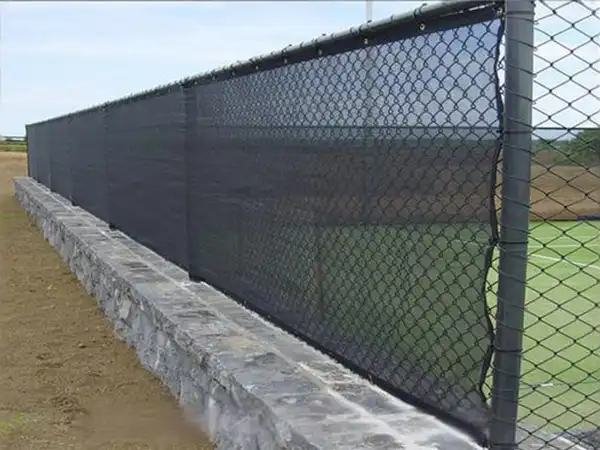
The printed windscreen for tennis courts is an innovative sports facility product that combines functional wind protection with an advertising medium. Made from high-strength, weather-resistant materials, it is installed on the outer perimeter fence of a tennis court. It effectively blocks strong winds, maintains stable airflow inside the court, and displays brand logos, sponsor information, or tournament names through custom printing – achieving both functional and commercial value for the court.
This product is widely used in professional tennis tournament venues, high-end clubs, school sports facilities, and community sports grounds, and has become an indispensable part of modern tennis court infrastructure.
II. Core Functions
1. Effective Wind Protection for Stable Play
Outdoor tennis courts are often affected by sudden wind changes. Even slight wind can alter the ball’s trajectory and affect the continuity of play. This product effectively reduces wind speed, with a wind reduction rate of 50%–70%, maintaining stable airflow inside the court and helping players perform consistently. For professional tournament venues, a wind reduction rate of 60% or above is recommended.
2. Visual Barrier for Better Ball Control
The windscreen provides a uniform dark background (e.g., forest green, dark green) that does not blend with the tennis ball, helping players judge ball speed and trajectory more clearly, thereby increasing focus and shot accuracy.
3. Privacy Protection and Environmental Enhancement
In community or urban courts where external distractions are common, the windscreen effectively blocks outside views, protects player privacy, and creates a cleaner, more professional environment for spectators – also beneficial for event security and order management.
4. Advertising Medium and Brand Display
The custom‑printed windscreen serves both functional and commercial purposes. Clubs can print their logos, sponsor brands, or tournament names on the fabric, increasing brand exposure and commercial revenue – an excellent sports‑court advertising space.
III. Material & Specifications
1. Material Options
| Material Type | Performance Features | Application Scenario |
|---|---|---|
| PVC coated (double‑side) | Fiber base with double‑side PVC coating; acid/alkali resistant, moisture‑resistant, heat‑resistant, chemically stable, long service life, exceptional weather resistance | Professional courts, high‑grade tennis courts (e.g., TF‑950) |
| PE woven | Anti‑corrosion, moisture‑resistant, heat‑resistant, chemically stable, long life; wind reduction 50%–70% | Standard tennis courts (e.g., TF‑750) |
| Polypropylene (PP) | Good air permeability, lightweight (approx. 10 oz/sq yd), full‑color digital printing possible | Budget or seasonal use |
PVC coated material is particularly suitable for professional advertising printing or silk‑screening, providing clear and durable printed graphics. Quality materials often include UV stabilizers and anti‑aging additives to extend service life.
2. Specification Parameters
| Parameter | Standard Size | Custom Range |
|---|---|---|
| Height | 2 m (approx. 6 ft) | 1.8 m – 2.7 m (6–9 ft) |
| Length | 18 m (approx. 59 ft) | Customizable based on fence perimeter |
| Color | Forest green, dark green | Custom colors available |
| Weight | 9–16 kg per piece | Depends on material and size |
| Wind reduction rate | 50%–70% | Different densities available |
Standard product size: 2 m (H) × 18 m (L), colors usually forest green or dark green, which are easy on the eyes and blend naturally with the court environment.
3. Structural Design
Reinforced edges – multiple rows of stitching on all four sides for increased tensile strength
Grommets – aluminum or brass eyelets spaced approx. every 300 mm for easy fixing
Easy installation accessories – supplied with S‑hooks or high‑strength weather‑resistant cable ties
Air‑permeable design – proper mesh density balances wind protection and breathability
IV. Custom Printing & Advertising Options
1. Printing Techniques
Silk screening – suitable for large single‑color or spot‑color logos and text; economical and durable
Digital inkjet (UV printing) – supports full‑color, high‑precision images, gradients, and complex patterns; ideal for high‑quality brand display
Spray painting – professional advertising coating for PVC surfaces
2. Customizable Content
Club logo and name
Sponsor brand identity
Tournament name and slogan
Team emblem and mascot
Full‑color advertising graphics
3. Printing Options
| Option | Feature | Best For |
|---|---|---|
| Single‑sided printing | Branding on one side, white/plain back | Advertising facing spectators; lower cost |
| Double‑sided printing | Graphics on both sides, uniform look | Full‑circle brand exposure around the court |
In mature international solutions, full‑color digitally printed windscreens on white PVC mesh can achieve complex and refined images, with low minimum order quantities and high flexibility.
V. Application Examples
2010 Guangzhou Asian Games – double‑side PVC coated windscreen, wind reduction 60%–70%
Guangzhou International Women’s Open – same series of products, proving reliability in professional events
Schools and sports venues across China – widely used in school tennis courts and large stadiums, combining functional protection with brand display
International professional tournaments (e.g., 2025 Mubadala Citi DC Open) – sponsor logos displayed on high‑quality windscreens, enhancing commercial value and professional image
VI. Installation & Maintenance
1. Installation Steps
Measure and plan – measure length and height along the inside of the fence to determine the installation area
Prepare tools – ladder, cable ties or S‑hooks, etc.
Fix the windscreen – hang on the windward side, attach through eyelets using ties/hooks to the fence
Tension and flatten – ensure the fabric is flat and wrinkle‑free, securely fixed
2. Installation Recommendations
Install on the windward side (the direction of prevailing winds)
Multiple panels can overlap or be joined to form a complete wind barrier
It is advisable to install a central support rope or reinforcement strip every 3 meters to reduce overall wind load
3. Daily Maintenance
Regularly check eyelets and fasteners for loosening or rust
Clean with mild detergent and a soft brush; avoid high‑pressure washing that may damage printed patterns
When not in use for extended periods, store indoors to prolong service life
Product Categories


 whatsapp